Author: Woodend Landcare
October Ground Cover
Click on the link above to view this month’s edition of Ground Cover.
This is the Landcare newsletter from the North Central Catchment Management Authority. It has information on current Landcare news, events, courses and current funding opportunties.
Working bee: Sunday 23rd October
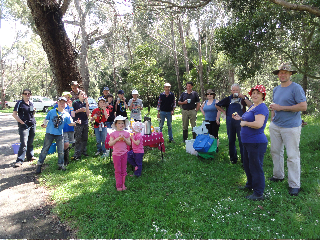
The monthly Woodend Landcare working bee is to be held this Sunday from 9.30AM.
We are joining with the Scouts to plant about 100 more native plants around the billabong below the scout hall. Access either from the scout hall and then walk down to the creek or drive in via Jeffreys Street.
Morning tea and tools provided. Depending on attendance, some weeding and cleaning up around previous plantings may be on the agenda, so bring your gloves.
What’s the Rush?
Like everyone who ventures outdoors, we at Landcare are affected by the vagaries of the elements, especially wind and rain. On the bad side, we have seen some damage to previous indigenous plantings over the last couple of years due to soft wet soils, flooding and wind. But on the good side, we have witnessed incredible growth and recovery too.
We have also seen some new plants colonizing areas due to changed conditions. For example, we see lots of rushes (Juncus species) growing in areas that were previously too dry to support them. These plants grow as clumps around a metre tall and have needle like foliage. Some are local plants and some are introduced, but they all do a similar job in providing food and habitat as well as helping to filter water before it reaches the creek. There are about 14 species of native Juncus growing in the Macedon Ranges and at least 4 of them live along the Five Mile Creek. The introduced “Spiny Rush”, (Juncus acutus) is considered a noxious weed and is hated by farmers as it can be toxic to stock. For non-botanists it is very hard to tell the local rushes from the introduced ones.
I have been asked whether we should try to eliminate the rushes in some of our more park-like areas. My response to this, as always is to ask what might appear in those places if we got rid of the rushes? This is a guiding principle for our group whenever we do weed control work. It is great to get rid of a nasty weed, but that piece of bare ground will be colonized by a possibly nastier weed unless other measures are taken, such as mulching or revegetation with a desirable species capable of competing with the weeds.
So, for the time being we might have to get used to seeing rushes and other wet area plants growing where they didn’t grow in the past.
Peter Yates