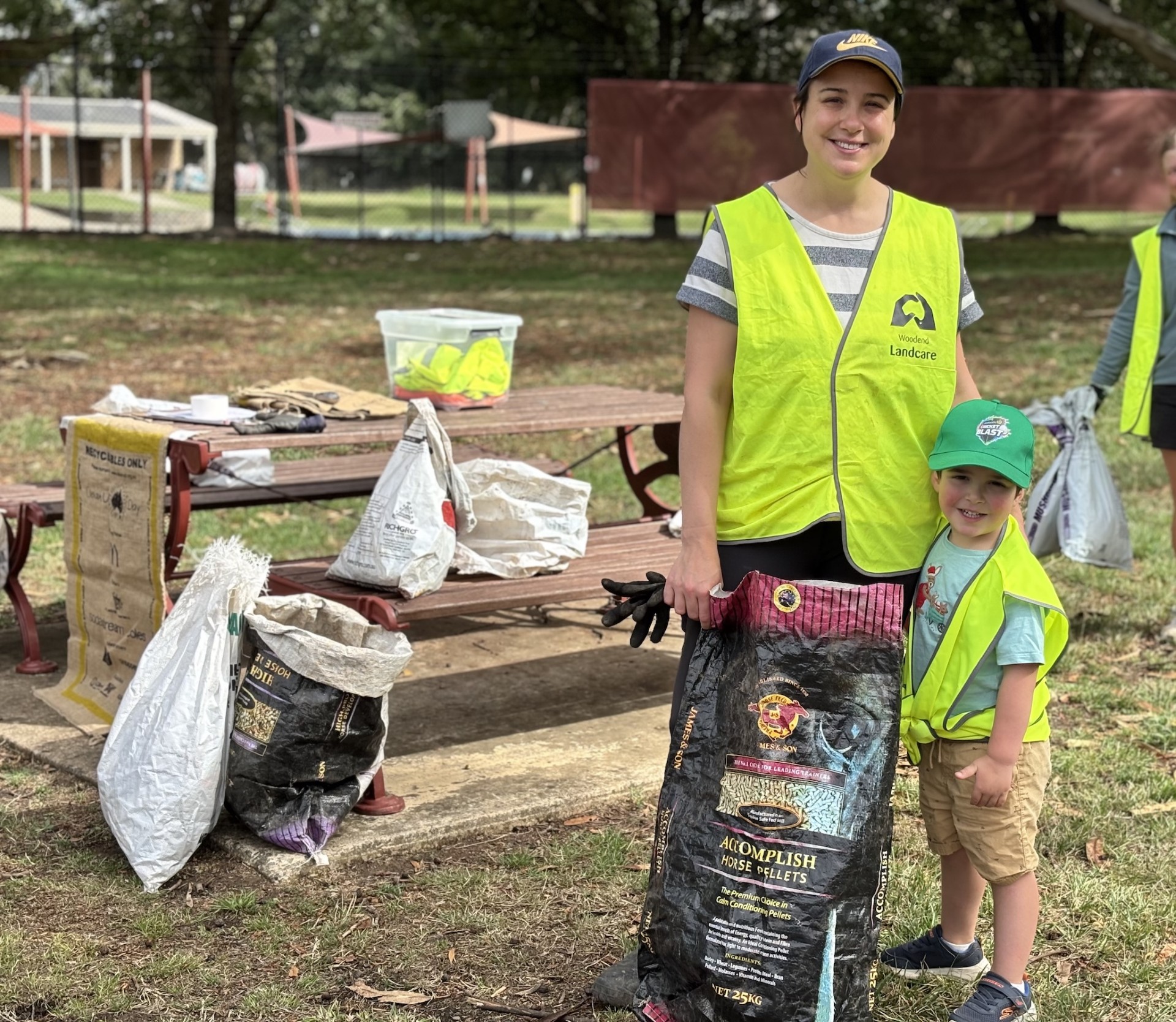
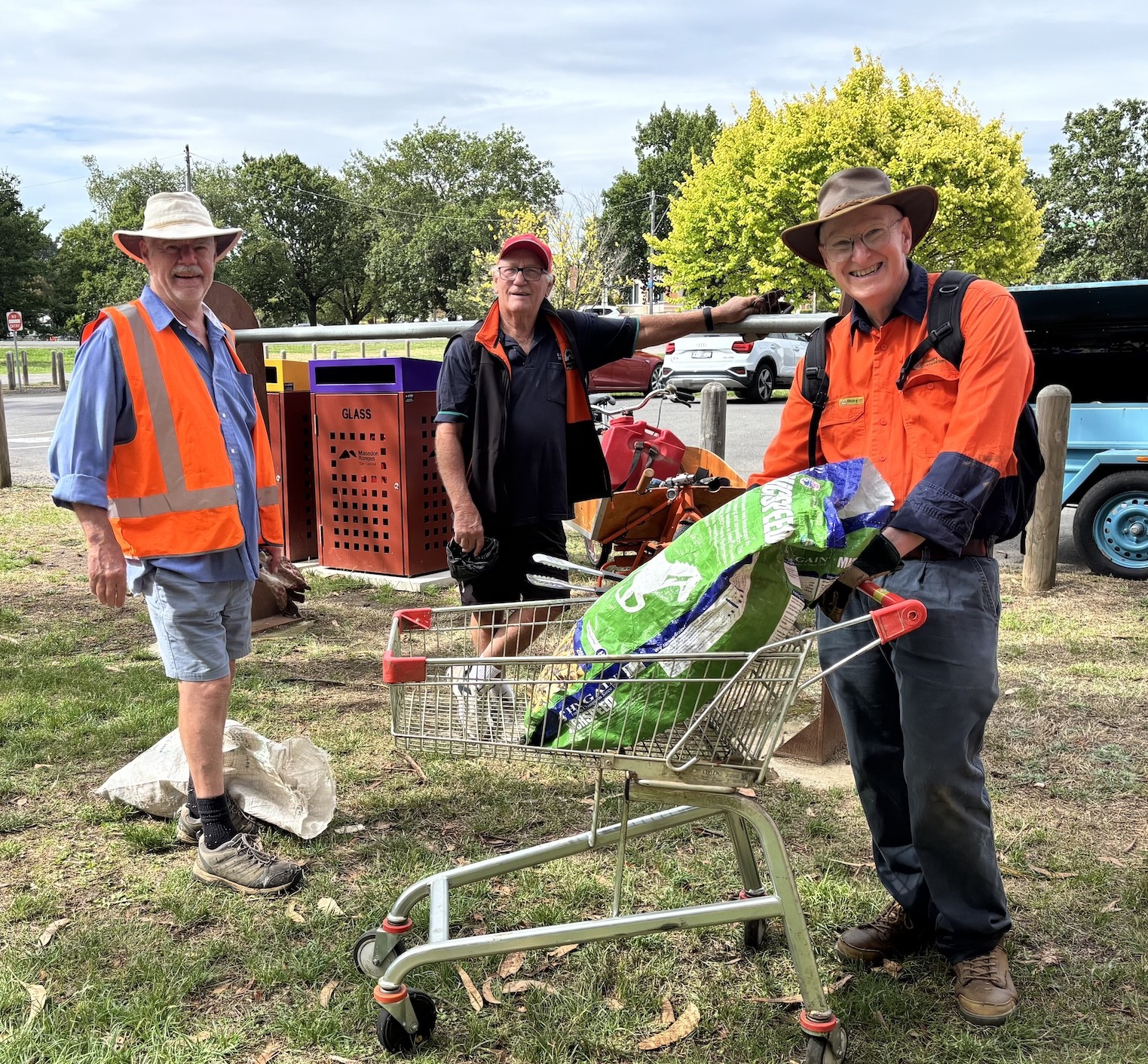
On Sunday 1 March, 15 people met at the Woodend Information Centre. They scoured up and down Five Mile Creek between Buffalo Stadium and Campaspe Park. Their mission was collecting rubbish. Still, some of us couldn’t resist the temptation to pick a weed or two along the way!
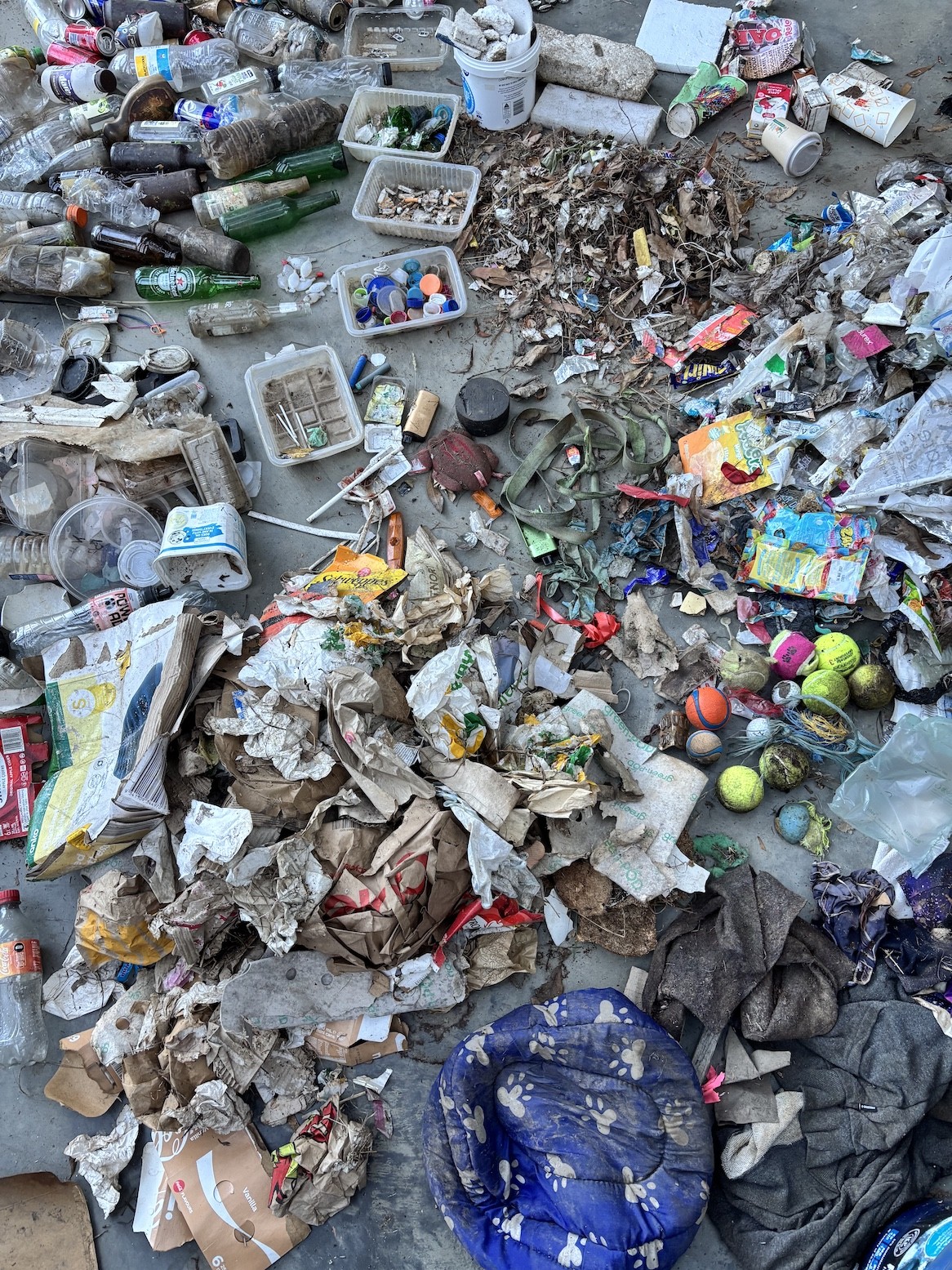
In total, we filled 8 big bags. They contained approximately 1,120 pieces of rubbish. This is an increase from 747 items in 2025. The increase is mainly due to soft plastic.
Of note:
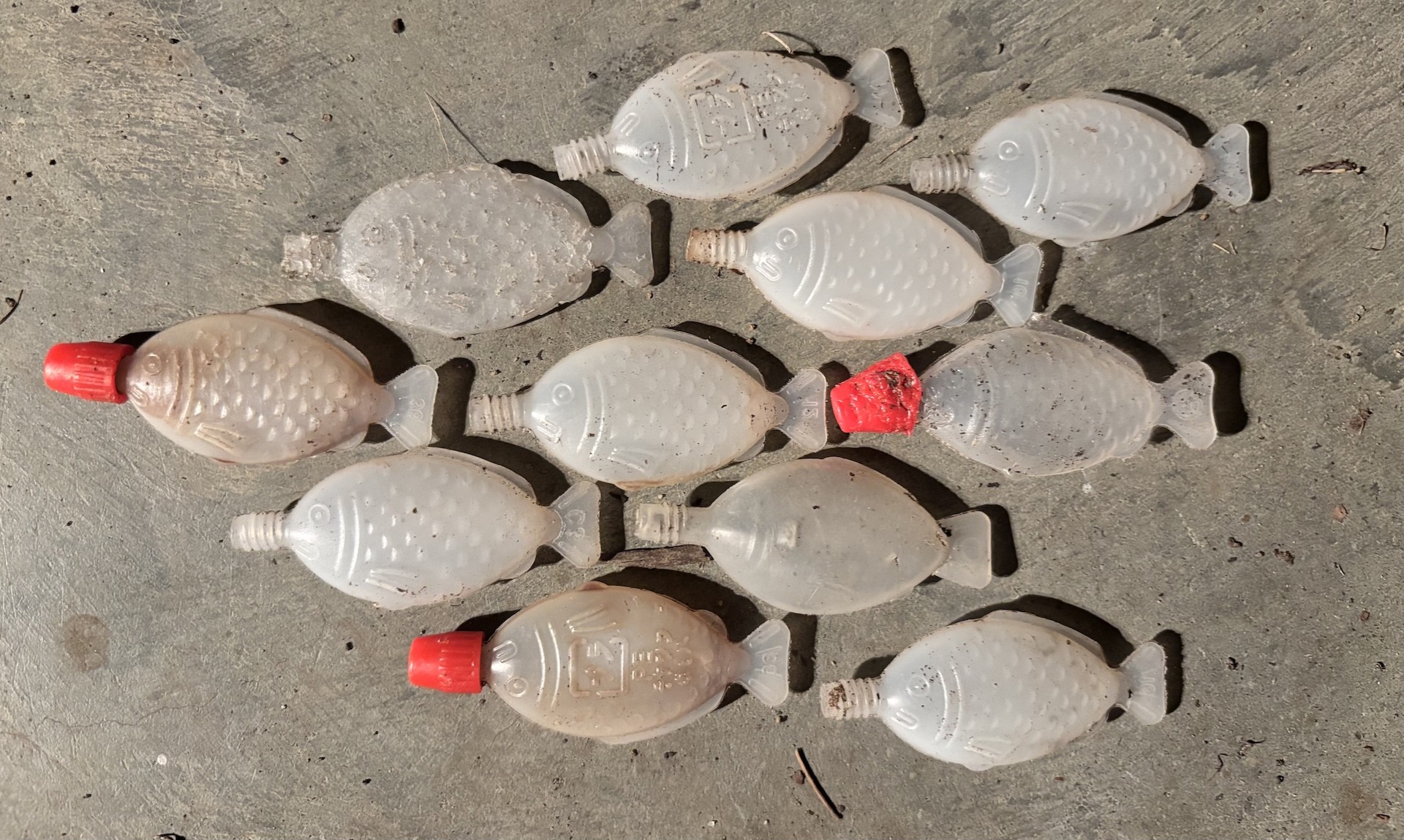
11 plastic soy sauce fish (not the type of fish we want in our creek!)
20 dog poo bags (including some unused bags)
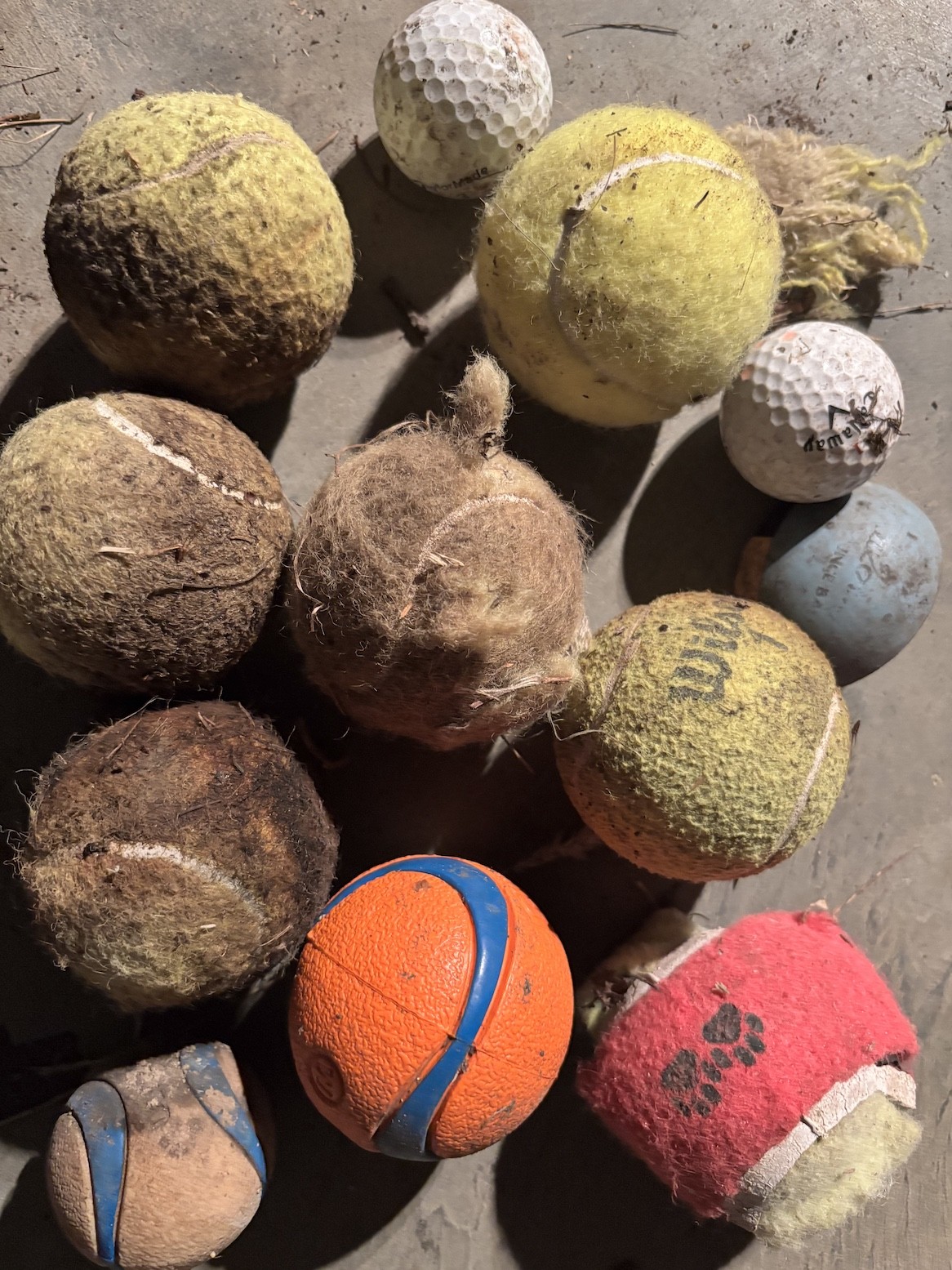
12 balls (tennis, golf, dog toys)
1 shopping trolley
1 pallet
2 vapes
It was pleasing to find no plastic straws, syringes or facemasks this year.
Additionally, no plastic plant guards were found. Instead, there were 4 biodegradable cardboard plant guards. This reflects Woodend Landcare’s switch to these for revegetation within the Five Mile Creek flood zone. Although cardboard guards are more expensive, it results in better outcomes for our local environment.
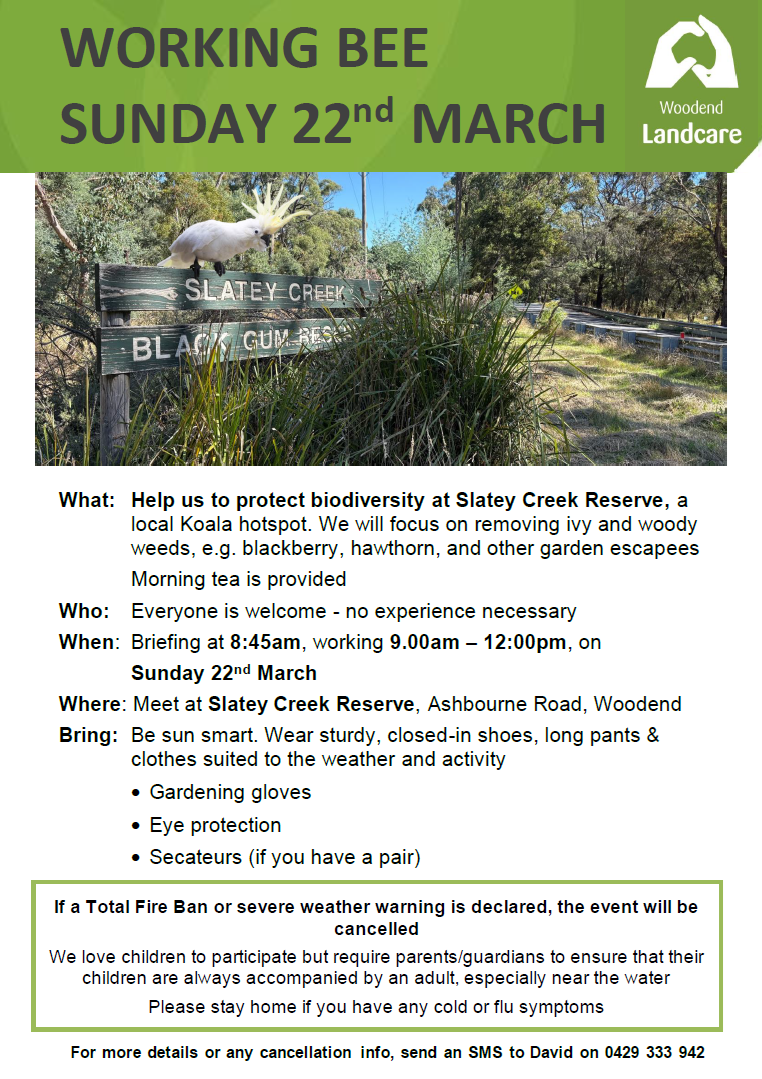
On Sunday 22 March help Woodend Landcare protect biodiversity at Slatey Creek Reserve. This reserve on Ashbourne Rd is a local Koala hotspot. We will focus on removing ivy and woody weeds. Briefing starts at 8.45 with morning tea provided. New volunteers are always very welcome!
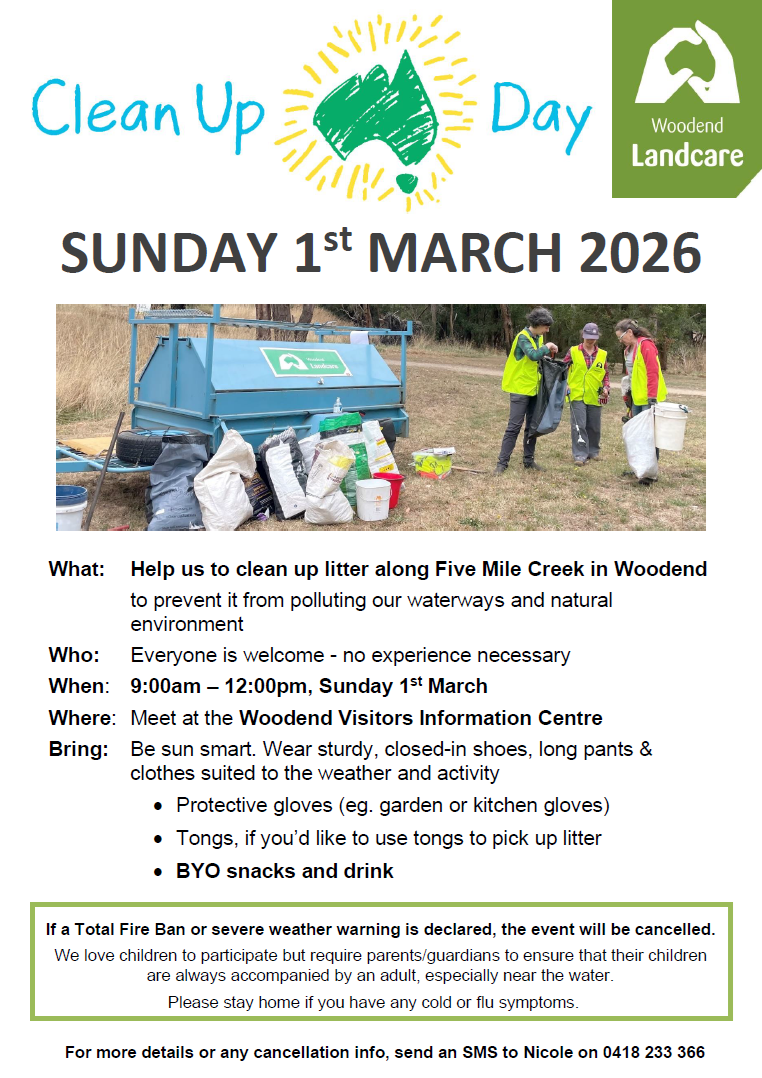
Grab your gloves and tongs! Help us clean up litter along Five Mile Creek in Woodend as part of Clean Up Australia Day. Your help will prevent rubbish from polluting our waterways and natural environment. Meet us at the Woodend Visitor Center at 9 am on Sunday 1 March 2026. Hope to see you there!
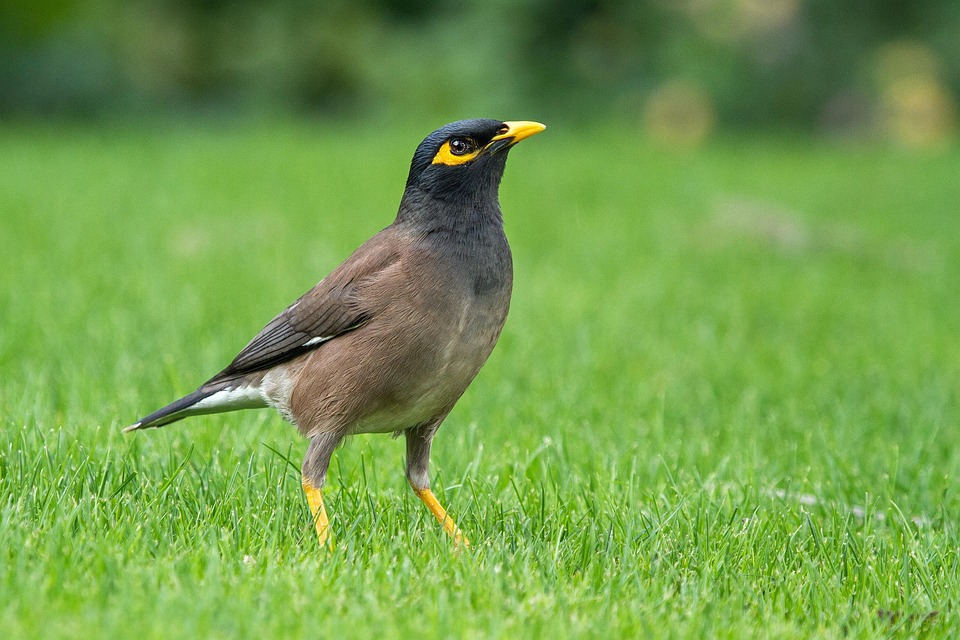
Living in the Macedon Ranges, we are fortunate to have many native birds. These birds call the natural environment, our farms, and gardens “home”. Our native birds have to deal with various threats to their existence, like roaming cats and foxes. Perhaps the biggest threat comes from the sky in the form of Indian Mynas (also known as “Common Mynas” or “Rats of the Sky”). These birds were introduced in 1862 from Southern Asia to control insects in Melbourne’s market gardens. That idea didn’t work, but the birds spread across Australia.
Indian Mynas are medium sized birds, with a brown body, black head, and yellow feet and beak. They are aggressive birds that predate on native birds and small animals, actively taking over nesting hollows. In some places, they have effectively eradicated all native bird life. Conversely in some places, trapping programs have virtually eliminated the Indian Myna birds.
Indian Mynas are scavengers and will thrive in places where food scraps are available. Left over pet food, chicken food or lunch scraps are all attractive to them. With a little effort, it is possible to reduce these food sources.
Across Australia, some Landcare groups and local councils have initiated successful control programs. The Indian Myna eradication program in the Macedon Ranges started in 2013. It was initiated and continues to be organised by Ron Fink, a member of Woodend Landcare. There are trappers and coordinators in most Macedon Ranges towns, resulting in some areas being almost free of Indian Mynas. Still, there is an ongoing need for volunteers. At present Kyneton has no trappers or a town coordinator, so unfortunately the Myna population is set to grow again.
If you do see or hear Indian Mynas on your property, consider becoming a trapper. It is a very worthwhile and beneficial contribution to the biodiversity in your area. Traps are available for free on a loan basis and training is provided. Traps are basically one-way walk-in cages. Trapped birds are kept in comfortable conditions and humanely euthenased as soon as possible after trapping.
If you think you can help MRIMAG (Macedon Ranges Indian Myna Action Group), please contact Ron Fink on 0407 661 129 or via email at woodendlandcare@gmail.com.
We are excited to announce a new project for 2026. During this year, Woodend Landcare will discover what animals live in and along Five Mile Creek.
Woodend Landcare has been caring for and revegetating Five Mile Creek through Woodend for 30 years. In many sections, the seedlings planted decades ago are now fully grown. They provide homes and food for a diverse array of animals. We know what plants grow along the Creek. However, we have little idea about what animals have moved into the revegetated habitat.
The aim of this project to discover what animals live in and visit the Five Mile Creek riparian corridor. This information will be logged on the official Victorian Biodiversity Atlas and used to guide future work. If it is decided that specific species need nesting boxes, Woodend Lions and Woodend Men’s Shed have offered to help.
Grant funding provided by the North Central Catchment Management Authority and Landcare Victoria will support this project. A fauna ecologist will be engaged to undertake several surveys. These surveys aim to discover and identify the animals. Survey methods such as spotlighting, harp traps, nest box checking, eBird and eDNA will be used.
Australian Wood Ducks, Five Mile Creek, Woodend. N. Middleton.
Extra funds needed for eDNA sampling
Environmental DNA (eDNA) is a high-tech biodiversity sampling method. It involves analysing trace amounts of DNA. This DNA is shed by animals into their surrounding environment, such as the water of Five Mile Creek. eDNA analysis will provide us with a list of species that live near and in the Creek, including vertebrates (fish, mammals, etc) and macroinvertebrates (worms, yabbies, tiny water bugs, etc). Macroinvertebrates are a crucial indicator of water quality. They are near the bottom of the food chain. Therefore, they are food for bigger animals such as fish and platypus.
The eDNA part of the project has come in $3900 over budget, but we consider it an important element of the project. We are therefore seeking donations to help cover the cost. For information, or if you would like to contribute (tax deductions are available), please contact woodendlandcare@gmail.com.
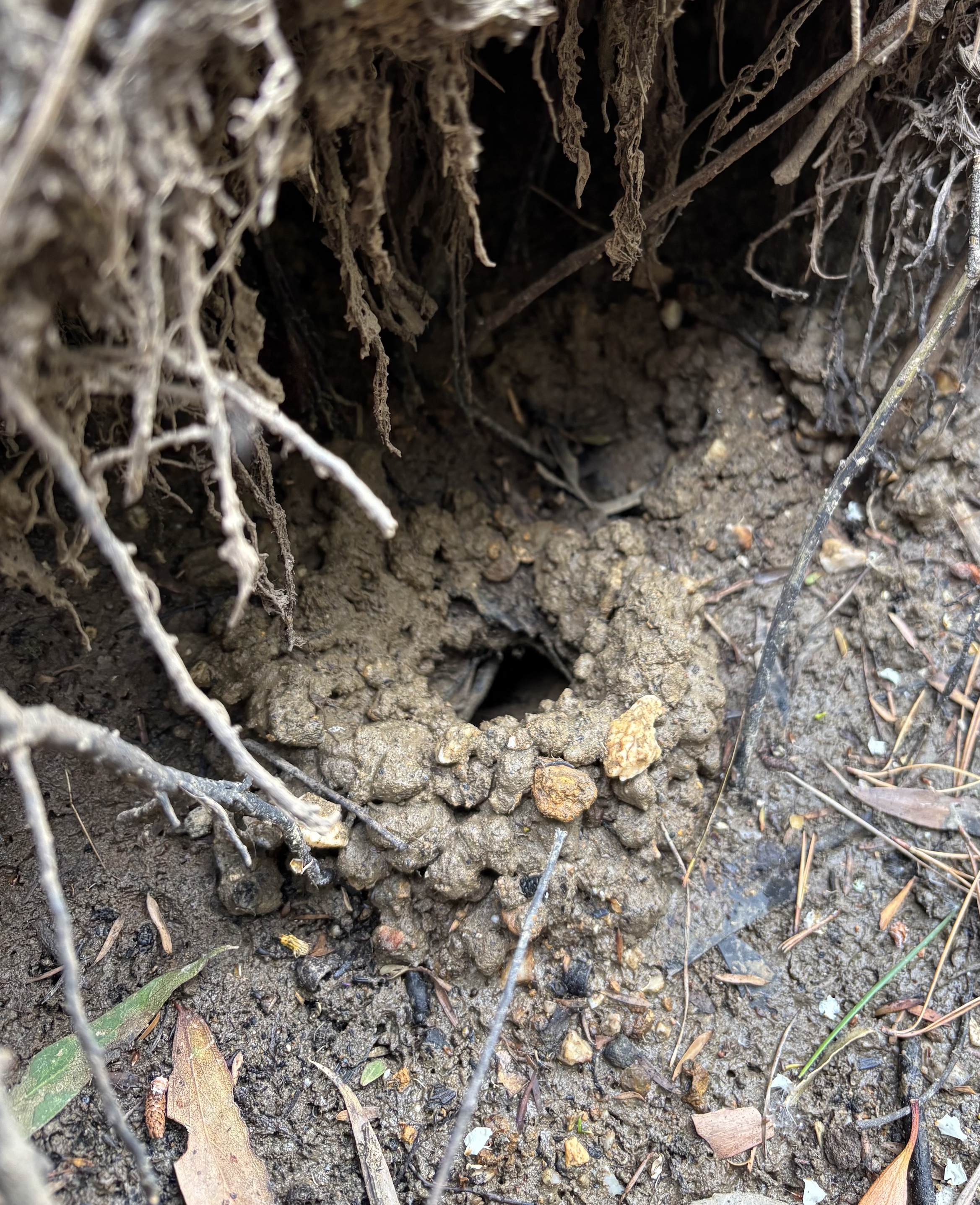
Freshwater Crayfish (yabby) hole, Five Mile Creek, Woodend. N. Middleton.
Community Events
As part of the project, we will be running four free community events where you can learn about and help discover animals along Five Mile Creek:
Sat 18 April – Fauna surveying – Discovering nocturnal animals.
Fri 9 October – Fauna surveying (Teenagers event). What animals live in our patch? (Spotlighting and more).
Sat 10 October – Breakfast with the birds. Join us at sun rise to hear and learn about the Woodend dawn chorus.
Sun 8 November – Project wrap up. What we found, what’s missing and what’s next.
Details will be available on our website and in the Woodend Star closer to the date.
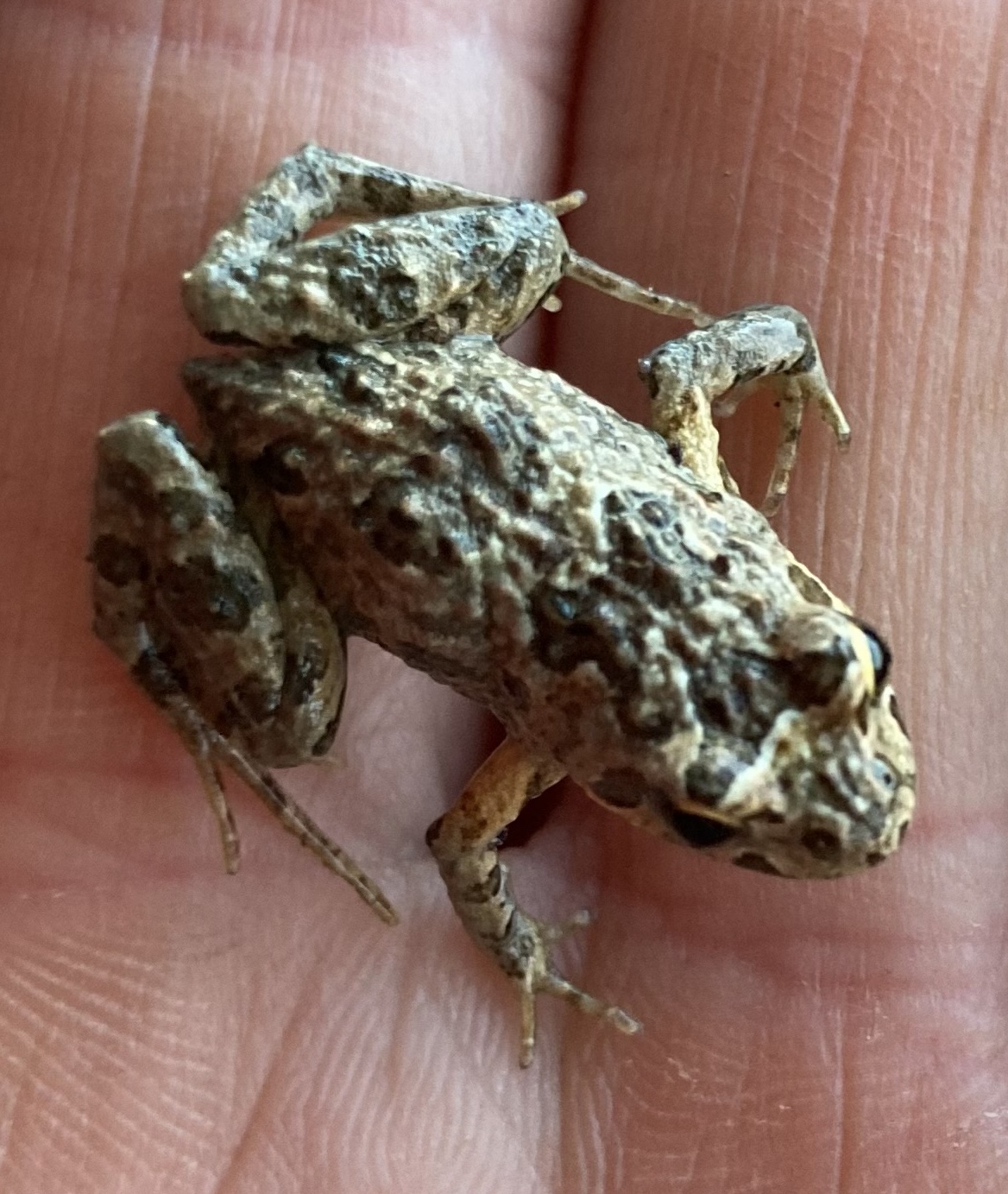
Spotted Marsh Frog near Five Mile Creek, Woodend. N. Middleton.
Upcoming Working bees (9 am Sundays):
Thanks to everyone who joined us on Sunday for our first working bee of the year. Our next working bees are:
22 February – Five Mile Creek near Crisp St.
1 March – Clean Up Australia Event. Meet at Information Centre. BYO gloves, appropriate clothing/shoes and be sun smart.
Our Thursday Crew continue to meet most weeks at various locations around town. Contact woodendlandcare@gmail.com to get your name on the mailing list to find out where to meet.
Hope to see you there!
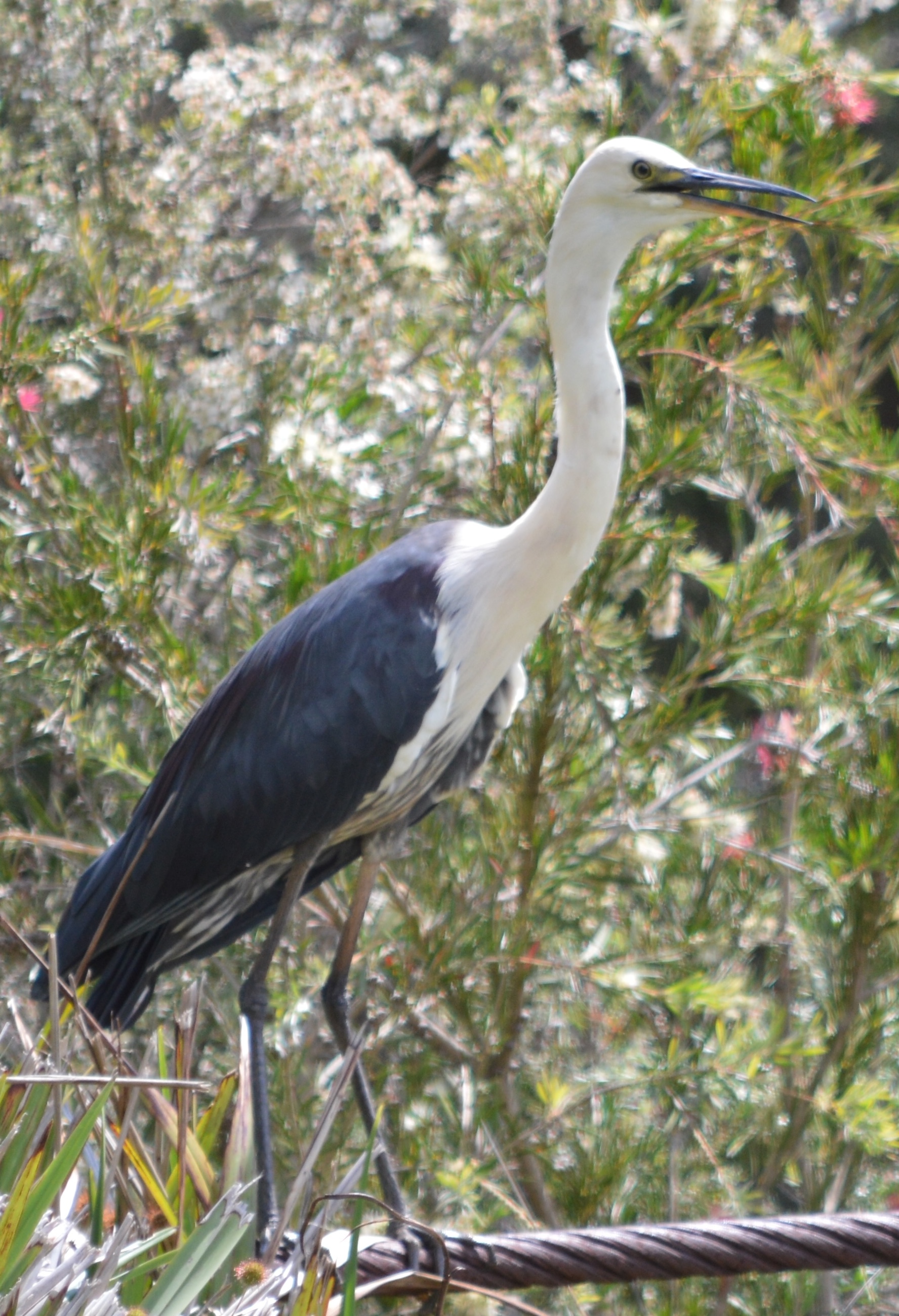
White necked Heron near Five Mile Creek, Woodend. Ann Yates.

 Woodend Landcare