Come along for a joint Landcare Working Bee and Clean up Australia Day event.
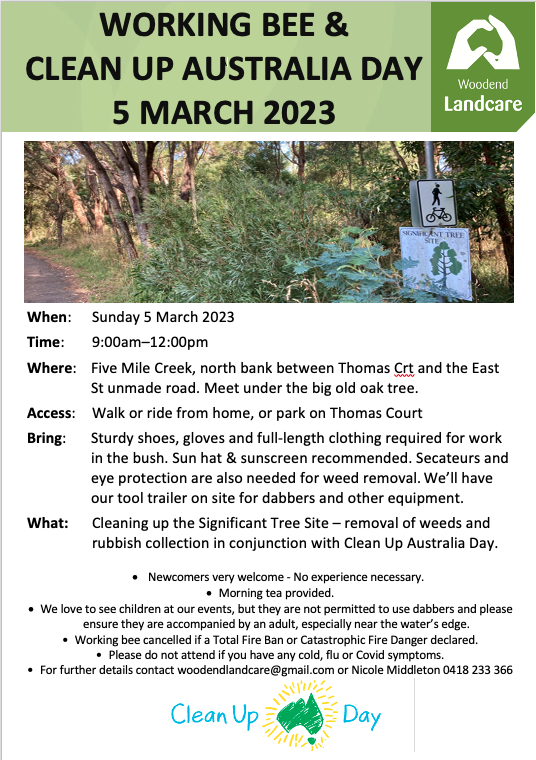
Come along for a joint Landcare Working Bee and Clean up Australia Day event.
Join us this Sunday for our first working bee for the year: Rotary Exercise Track, heading west from Jeffrey St.
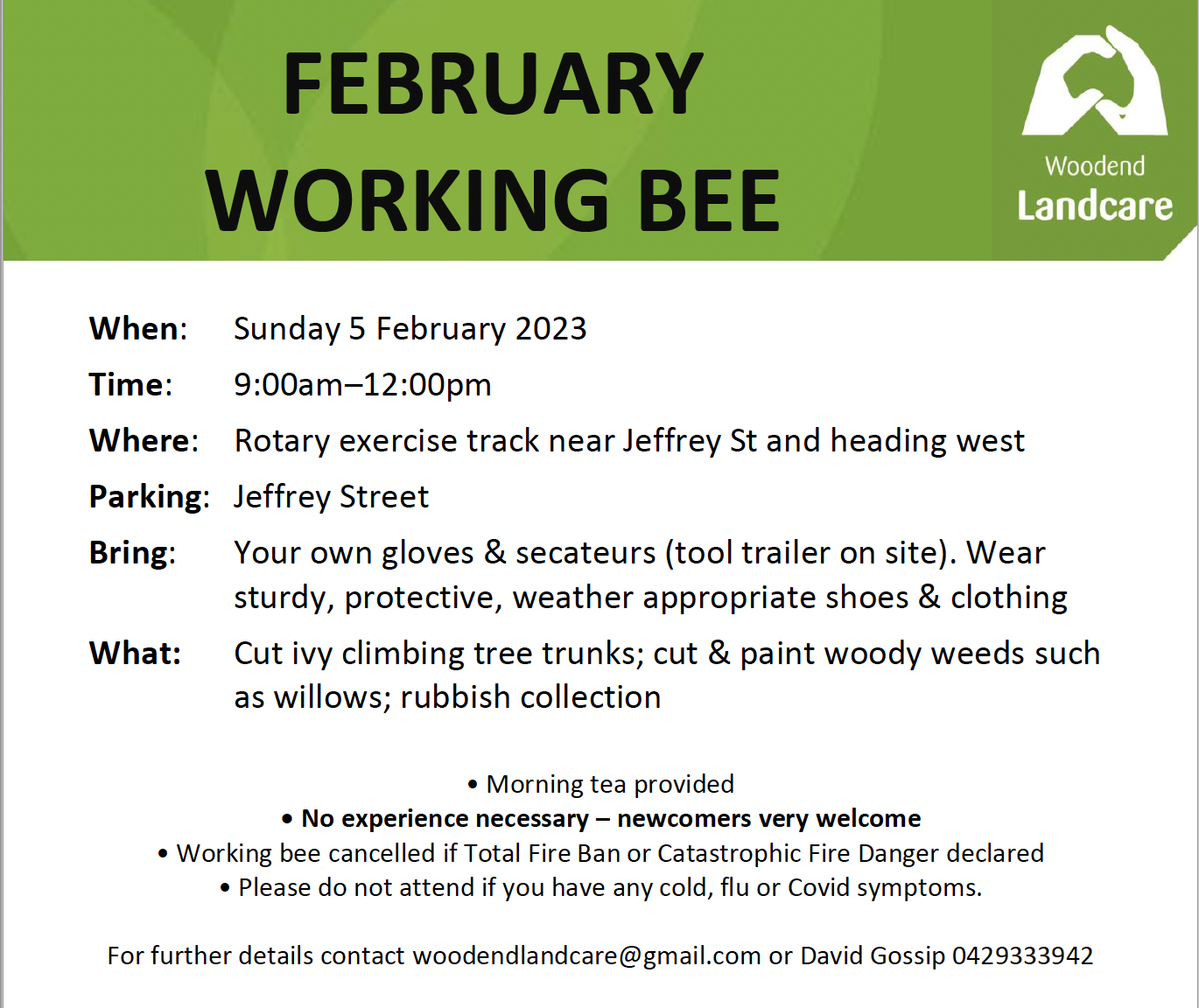
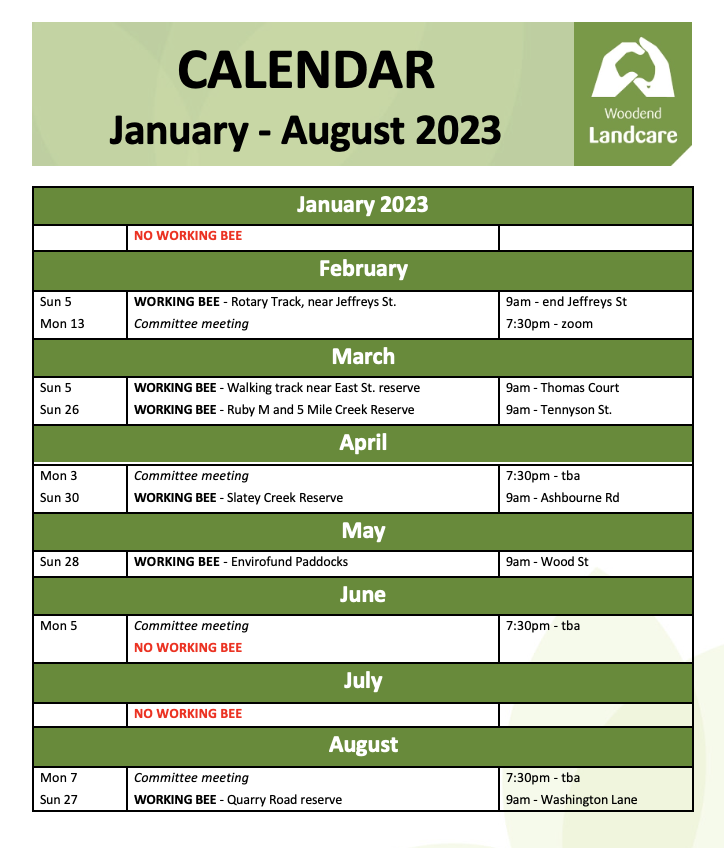
After a damp 2022, we are looking forward to resuming our working bees in February 2023. Given the height of the creek last year, there’s lots to do and new helping hands are always appreciated. Many hands make light work! Check our calendar for dates and locations.
The Thursday Crew continue making a difference at various locations around town. Thursday Crew working bees are held every Thursday morning during most of the year. Contact Dave (sms 0405 910 176 or email dvbower65@gmail.com) if you are interested in being involved.
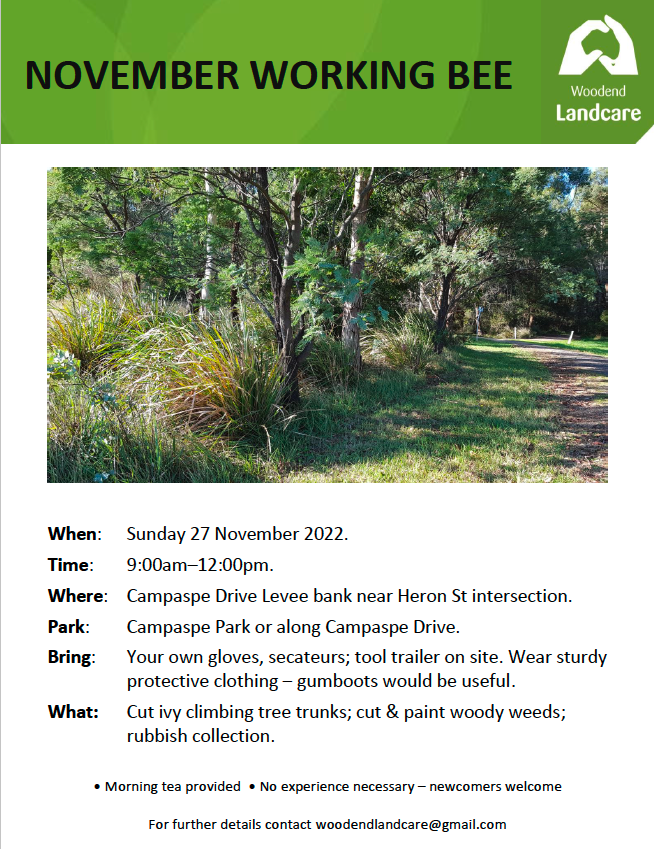
After a long absence, our next Sunday working bee is set for 22 November from 9am until 12 pm. The working bee will be concentrating on weed control in the Pyke/Wood St paddocks, which are east of the Children’s Park and south of the creek. There will be a cap on numbers at 10 and a sign-in on arrival.
Our AGM will also be outdoors this year, held immediately after the working bee at 12:30. We do welcome new members on the committee. Please email us if you are interested.
Morning tea and a sandwich lunch provided.
In order to keep COVID-safe we ask attendees to note:
Finally, please wear sturdy footwear, full-length protective clothing, gloves and eye protection. Also, don’t forget your hat and water bottle.
Any questions, please don’t hesitate to get in touch. We are super excited to be able to get out there again!

The Upper Campaspe Landcare Network has launched a project designed to establish new – and enhance existing – pollinator-friendly habitats and food sources for bees, butterflies, birds and other pollinating insects and wildlife through the Upper Campaspe Catchment. Our Landcare Facilitator, Rebekah Ritchie, explains…
“While we do not have exact figures for the Upper Campapse (yet), Australia has around 2,000 native bee species, all of which are important pollinators. There are also a couple of thousand butterfly, wasp, fly, moth, beetle, thrip and ant species, some of which are documented pollinators, alongside birds, bats and some smaller mammals.
Worldwide 90 percent of flowering plant species depend at least partly on animal pollinators for reproduction. Pollinators are declining in both diversity and number – facing threats including habitat fragmentation, harmful chemicals, invasive species, and of course, climate change.”
What are Pollinator Corridors???
Pollinator Corridors are connecting patches of vegetation of various scale designed to help indigenous pollinators move through the landscape. They are designed for native species—bees, insects, butterflies, moths, birds, and bats among others—that keep local ecosystems running.
Individual contributions to Pollinator Corridors can be as small as a potted plant or as large as a field! The scope is only limited by your space, time, and capability.
Useful videos to help you get started
During Pollinator Week, UCLN presented a series of useful videos on how to encourage pollinators to your property! Click on the links below to watch:
UCLN President, John Walter teaches us how to site and record pollinator sightings!
UCLN Treasurer, Chris Gymer creates a pollinator watering station and a butterfly puddler!
UCLN Vice-President, Michael Nott builds a native bee hotel – or three!
UCLN Landcare Facilitator, Rebekah, makes a Bug Mug
For more info visit: www.uppercampaspelandcare.org.au

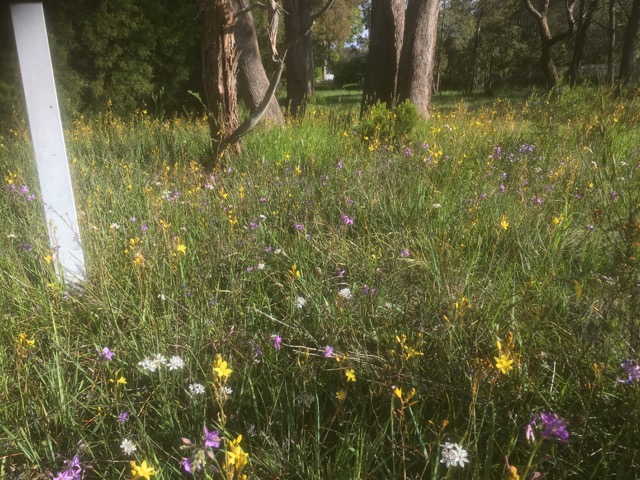
Woodend is blessed with several excellent remnant areas where wildflowers can be enjoyed from about September to December, especially in wet years.
In 2016 we had a wet year and the wildflower display on a section of Victrack land adjacent to Quarry Road was fabulous. Ecologist Karl Just was asked to do a flora survey and recorded no less than 81 indigenous species and two threatened species. With a more detailed survey he predicted that many more species would be identified.
Click here to read Karl Just’s Quarry Rd report.
2020 has also been a wetter than average year and, as a result, the display has probably been even better than in 2016. The prime viewing times are sunny days during October and November, but there are plenty of flowers at other times during spring and early summer.
The only threats to this area are the proliferation of introduced weeds such as Broom and Gorse and sometimes some overzealous mowing by local residents which can decimate the flowers just as they are about to flower and set seed. Thankfully mowing is usually restricted to the narrow walking pad through the area, so does minimal harm.
Please enjoy the area, especially near the Washington Lane intersection if you get a chance. Try to avoid trampling the tiny plants. You can see most of the flowers from the footpad through the area.
PS. The word on the street is that the Woodend Grasslands are also looking pretty spectacular at the moment.
Your feedback is invited on a community plan for local action on climate change, which has been developed over the past few months. The plan outlines actions to build on existing community activity for sustainability, under the themes:
Importantly, all themes and actions are supported by the overarching principles of (getting) People on Board (to work towards) Zero Net Emissions.
Click here to view the plan and give your feedback

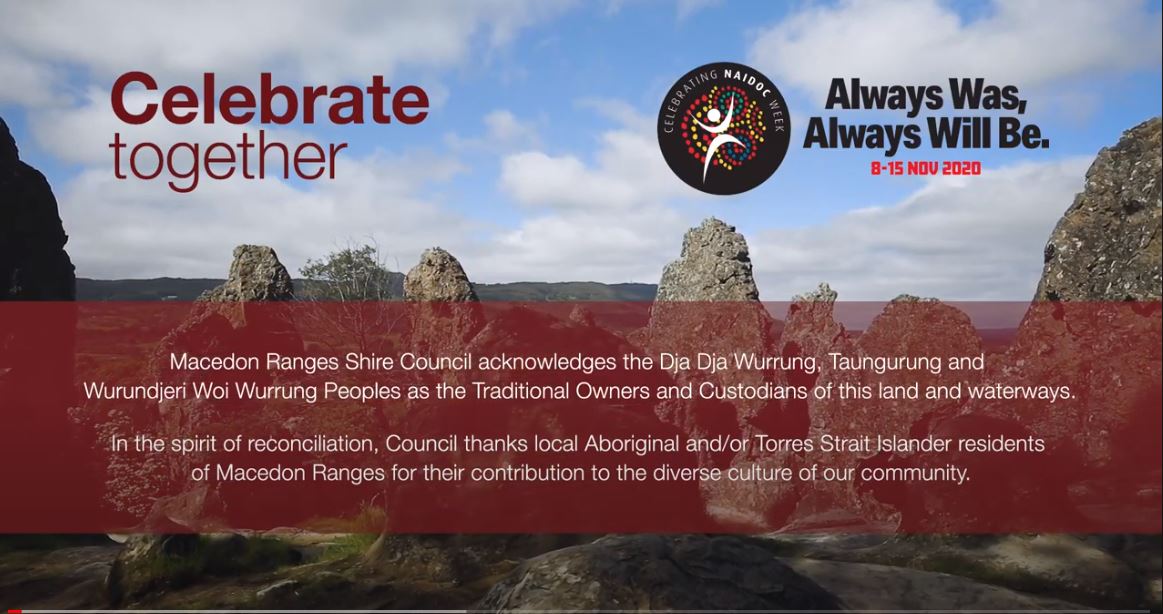
Watch the welcome to country and smoking ceremony as part of this year’s celebrations in the Macedon Ranges Shire. Jaara elder Uncle Rick Nelson of Dja Dja Wurrung explains some of the cultural foundations for this special ceremony at magnificent Hanging Rock.
 Woodend Landcare