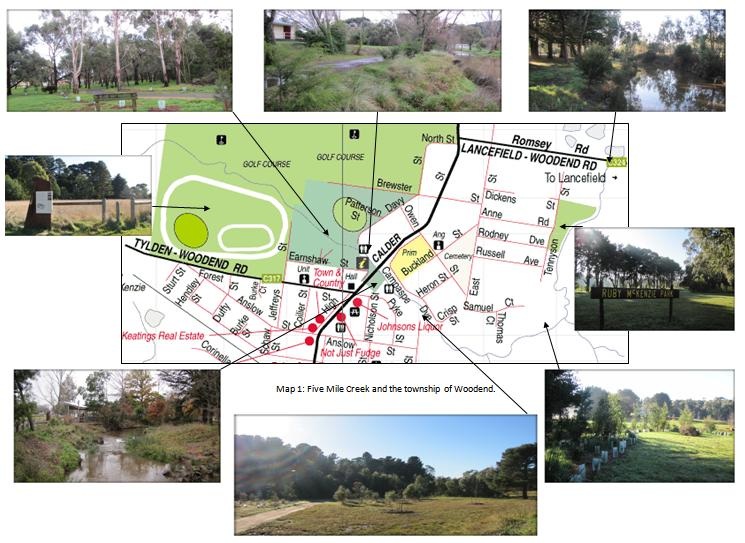
The Five Mile Creek runs through the centre of the Woodend township and is significant open space for the community of Woodend. The creek and its catchment supports a range of threatened flora, fauna and vegetation communities, in particular the threatened Black Gum.
The Woodend Five Mile Creek has been the subject of extensive community-based restoration for over twenty years, led by the Woodend Landcare with the support of Council and the North Central Catchment Management Authority. This work has significantly improved the environmental assets of the creek and surrounds, primarily via woody weed control and revegetation.
Our regular working bees have involved the larger community, scouts and schools in bringing the creek back to a healthy waterway with more than 12,000 indigenous plants put in the ground.
Woodend Five Mile Creek Master Plan
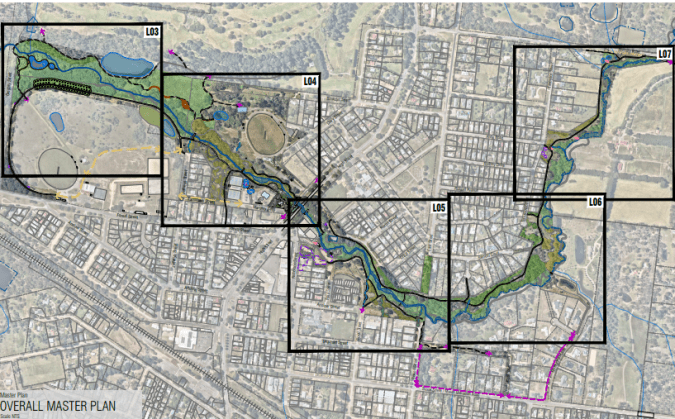
 In 2022, Woodend Landcare partnered with Macedon Ranges Shire Council to develop a Master Plan and Strategic Environmental Works Plan for the public land along the creek corridor.
Click here to view the Master Plan and Strategic Environmental Works Plan
These strategic documents will guide habitat restoration projects, support grant applications and inform infrastructure needs to improve accessibility to the creek for a broad range of recreational activities.
The Master Plan will ensure future actions have the best ecological outcome for the creek and its surrounds and will ensure this work is supported by the local community
Other reference material for Woodend Five Mile Creek
A history of plantings along Five Mile Creek by Woodend Landcare from 2004 to 2011
The Future of Five Mile Creek: A community involvement plan
This plan developed as part of a community consultation process instigated by Woodend Landcare in 2011. The plan outlines a vision, as identified by stakeholders and community, to improve the Five Mile Creek. It also addresses the important issue of ongoing management and maintenance responsibilities for on-ground works that are undertaken along the creek. In doing so it identifies the level of involvement that community members and groups are prepared to commit.
 Woodend Landcare